A freestanding dual handwashing station is an independent, non-potable sanitation asset designed for locations lacking plumbed municipal water hookups. Under OSHA standard 29 CFR 1926.51, jobsites where workers handle…
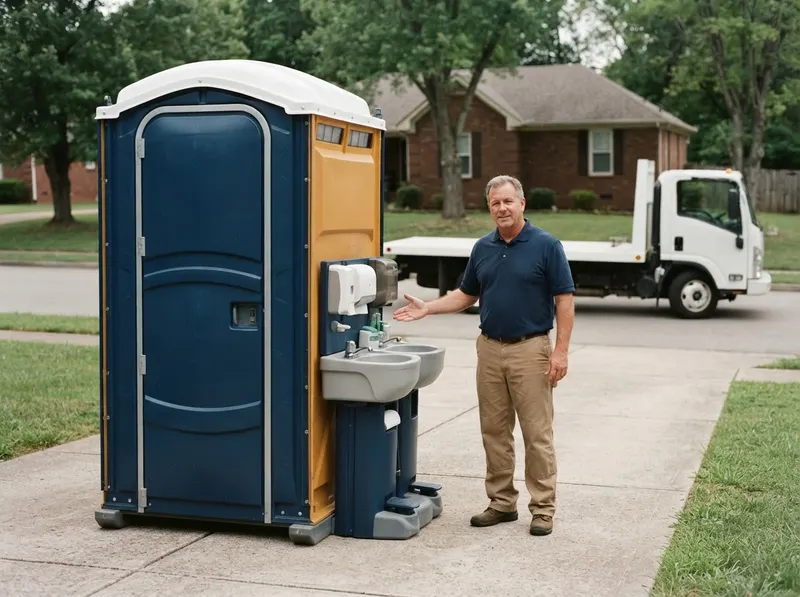
A freestanding dual handwashing station is an independent, non-potable sanitation asset designed for locations lacking plumbed municipal water hookups. Under OSHA standard 29 CFR 1926.51, jobsites where workers handle hazardous chemicals, coatings, or concrete require readily accessible running water for hand cleansing; standard chemical toilets equipped solely with alcohol hand sanitizers do not fulfill this legal threshold. A dual sink unit features separate fresh-water supply tanks (typically holding 20 to 45 gallons) and fully isolated graywater recovery tanks, delivering approximately 200 to 350 individual hand washes per fill. The hands-free foot pump design prevents cross-contamination between users, which makes these stations standard requirements for temporary food service zones regulated by the Metro Public Health Department in Nashville. A freestanding station operates independently of standard portable toilet shells, meaning two tradespeople or festival visitors can wash simultaneously without occupying an active commode stall, directly cutting site bottleneck delays in half.
Navigating Nashville logistics requires practical equipment placement planning. For tight urban infill developments in The Gulch, Germantown, and Wedgewood-Houston, narrow zero-lot-line staging often leaves zero room for wide utility trailers. Dual handwash units have a compact footprint of roughly 30 inches wide by 30 inches deep, allowing service crews to maneuver them through standard 36-inch pedestrian gates, tight construction fencing, or commercial alleyways using heavy-duty hand trucks. For outdoor events near Ascend Amphitheater, Bicentennial Capitol Mall State Park, or residential renovations in Green Hills and Sylvan Park, physical site leveling is the single primary requirement. When placing stations on the rolling terrain of Donelson or the steep driveway slopes characteristic of Bellevue, units require flat, compacted ground or wood cribbing to prevent water sloshing and ensure mechanical foot pumps maintain continuous line prime. Crews secure units with weighted ballast or anchor stakes whenever high wind gusts threaten exposed areas like Nissan Stadium parking zones.
Selecting standalone sinks versus combination units involves clear operational trade-offs. Portable toilets with integrated mini-sinks conserve exterior square footage, but their internal 8-to-12-gallon basins run dry rapidly under heavy crew use, and dirty wash water drains directly into the commode tank, consuming valuable blackwater volume. A separate dual handwashing station quadruples the available wash volume, but it demands designated footprint space on-site and requires service route trucks to maintain clear line-of-sight access within 25 feet for weekly pump-and-fill servicing. 1. Submit your project location and estimated head count to schedule delivery. 2. Service drivers drop and position the station on level ground, charge the freshwater reservoir, and stock paper and antibacterial soap dispensers. 3. Technicians complete scheduled route visits to pump the graywater, sanitize the basin surfaces, replenish consumable soap and towels, and top off clean non-potable water. 4. Call (629) 302-0461 to coordinate final equipment pickup once site operations conclude.
Every job gets a firm, written price after a free on-site visit.
Tell us about your freestanding dual handwashing station job in Nashville and we'll send a clear, written quote, usually the same day.
 Prairie Dog Portable Toilets