Multi-story commercial development in the downtown core, The Gulch, and Wedgewood-Houston requires dedicated upper-floor sanitation to maintain labor efficiency and satisfy OSHA standard 29 CFR 1926.51. When a framing…
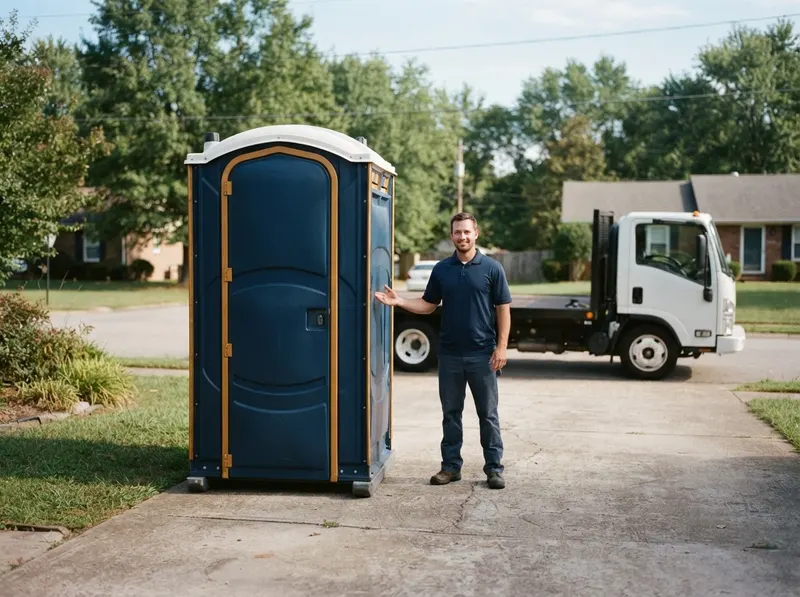
Multi-story commercial development in the downtown core, The Gulch, and Wedgewood-Houston requires dedicated upper-floor sanitation to maintain labor efficiency and satisfy OSHA standard 29 CFR 1926.51. When a framing or concrete crew works 10 stories above street level on a project near Division Street, descending via an exterior buck hoist for restroom breaks consumes roughly 20 to 30 minutes per worker per trip. Positioning a crane-lift high-rise toilet on the active working deck recovers an estimated 4 to 7 worker-hours per week per employee. These specialized units feature heavy-gauge, powder-coated steel lifting cages engineered to meet structural load standards for overhead crane transit, paired with low-profile caster wheels or fork pockets to navigate tight urban deck post-tension cables without surface damage.
Selecting a certified lift-rigged unit is mandatory over a standard standalone cabana. A standard portable restroom lacks dynamic load-tested lift points and will buckle or detach under wind shear and crane cable tension. The crane-lift unit balances structural reinforcement with an internal 38-to-60-gallon holding tank, keeping dry weight between 220 and 310 pounds for secure rigging. The functional trade-off is waste capacity: because crane capacity limits and sloshing during lift maneuvers require frequent servicing, these compact tanks mandate weekly or bi-weekly servicing rather than the larger 70-gallon capacities found in ground-level units. In tight historic footprints like Germantown or high-density infill in Sylvan Park and 12 South, units must be flown directly to the floor plate because tight zero-lot-line alleys cannot accommodate standard service truck parking.
Servicing elevated units across Davidson County relies on coordinated crane operations or direct utility hoist access. If a site lacks permanent hoist car availability, the unit is flown by tower crane back to street level or a designated loading dock along corridors like 8th Avenue South during scheduled low-traffic early morning windows. Step one requires the general contractor to verify hook availability and signal clearance. Step two involves slinging the unit through certified four-point lifting eyes using tagged wire ropes. Step three lands the unit directly on level, reinforced subflooring where a pump technician evacuates the sealed holding tank, restocks supplies, and logs sanitization before rigging returns the unit to the working slab.
Every job gets a firm, written price after a free on-site visit.
Tell us about your crane-lift high-rise toilet job in Nashville and we'll send a clear, written quote, usually the same day.
 Prairie Dog Portable Toilets